
I found myself on a tour booked the night before to Petra, I crossed the border into Jordan from Israel and experienced an immediate sense of anticipation to be independently travelling again. My journey started in Eilat, the northernmost tip of Israel in the Southern Negev Desert. Five minutes into our bus ride in Jordan, an awe-inspiring sight unfolded before us – a panoramic view of four countries: Egypt, Jordan, Saudi Arabia, and Israel, two continents, Africa and Asia with the Red Sea and the Dead Sea stretching out beside each other. There are 22 Arabic countries in the world, and I’m glad that this spontaneous trip was the first one I’ve had the opportunity to explore.
Since 1946, Jordan has proudly stood as an independent kingdom and has earned a reputation as one of the most politically liberal nations in the Arab world. This country with a population of approximately 11 million hosts over 3.5 million refugees, Jordan opens its borders to those in need, and these compassionate efforts have earned them the heartfelt title of ‘Arab House’ among the international community. With over 90% of its population fluent in English and 80% holding university certificates, Jordan as a nation values education. As one local man I met put it, ‘We may not have oil or much water, but we hold the minerals of life, which is education’ which was very beautiful.
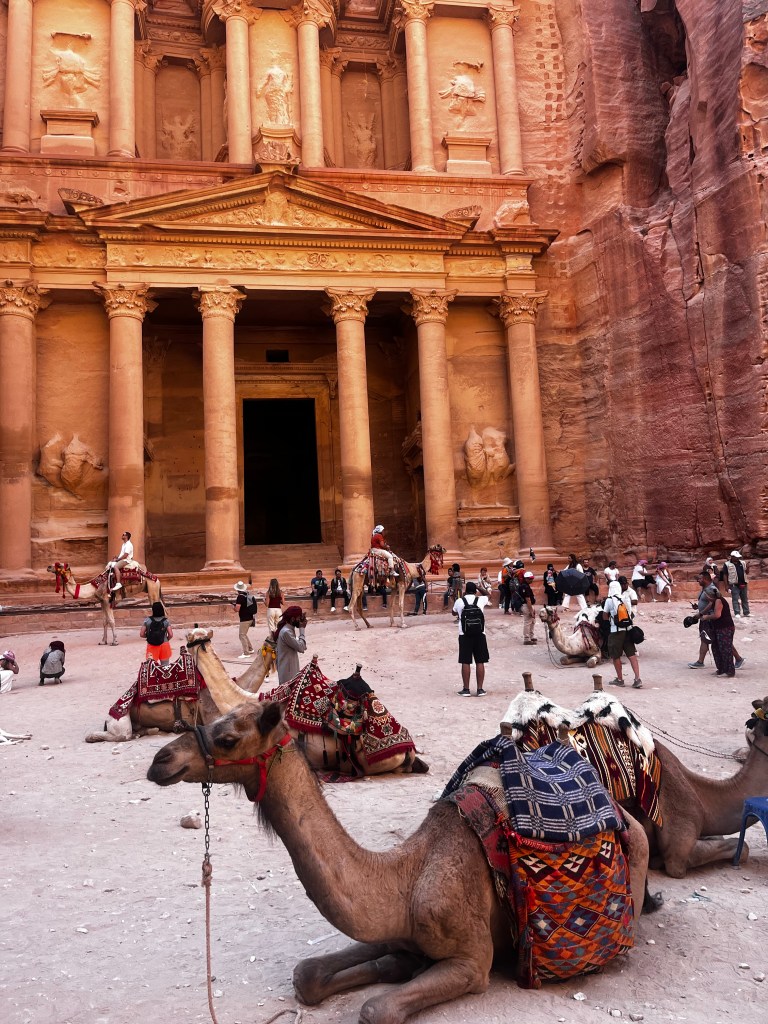
The local providing me with most of this information was Kareem, my tour guide for the day. The tour was full of older American couples and one Japanese guy a little younger than me, so Kareem took me under his wing and named me as the English Rose. Travelling with an open mind and heart is wonderful, but staying vigilant and relying on your judgment is equally important. He went out of his way to provide me with food and magnets as tokens of his hospitality. He even placed me at the front of the crowd to paint my face with Petra’s distinctive stone. While I was genuinely appreciative of his kind gestures, it eventually became a bit tiresome. I teamed up with a fellow traveller from Tokyo despite our language barrier – he spoke no English, and my Japanese vocabulary was limited to “Konichiwa” – we had a wholesome time together exploring the wonder of Petra.
To get from Aqaba to Petra, the city I entered from is a bustling city that hosts the country’s largest population and serves as a key entry point for goods via the Red Sea, we drove through communities and watermelon and potato farms in the heart of the desert. I got a coffee in a small shuk for a much more reasonable price than where I had been living in Tel Aviv. The first local I met got me a pen and paper and wrote around 7 Arabic phrases for me to learn (along with his phone number which I will definitely not be calling).
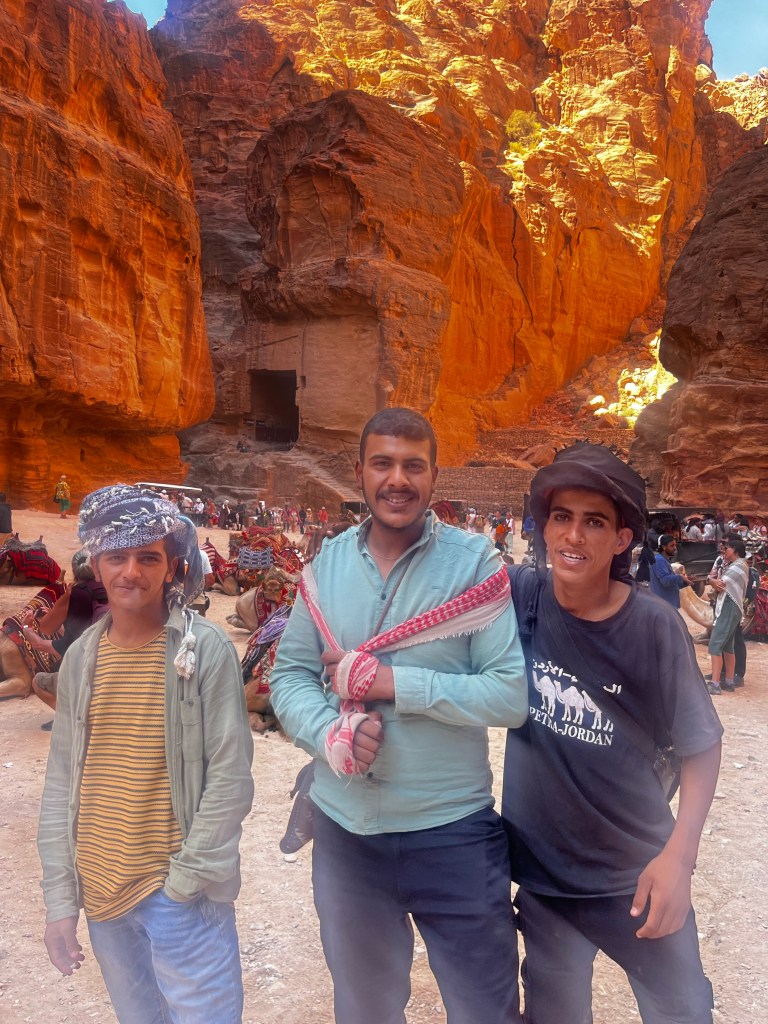
Jordan is full of natural wonders within its borders. These include the Dead Sea (which I went to from the Israeli side a few weeks prior), the Jordan Valley, and one of the 7 world wonders, Petra, which sprawls across 450 square kilometres of the land. I will go back and explore more of Jordan in the future and stay for a more reasonable amount of time. The bus then stopped at the famous Wadi Rum, a UNESCO site and a bucket list activity is to camp in Wadi Rum and watch the stars as the area has little to no pollution and is apparently magical upon a full moon. You see division in the north and south in environmental diversity. In the northern part of the country, the landscape is much more green-nourished, while the southern region is a vast desert, and in return, Jordan lacks water, they get it from their two rivers and 30% from the Israeli water supply.
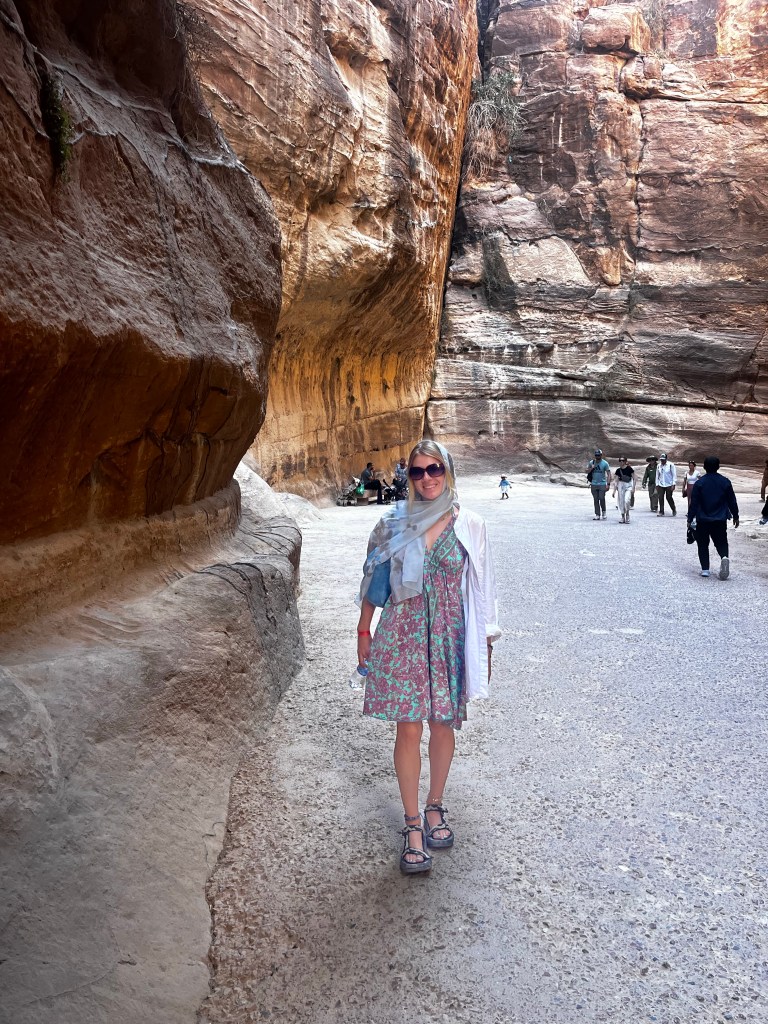
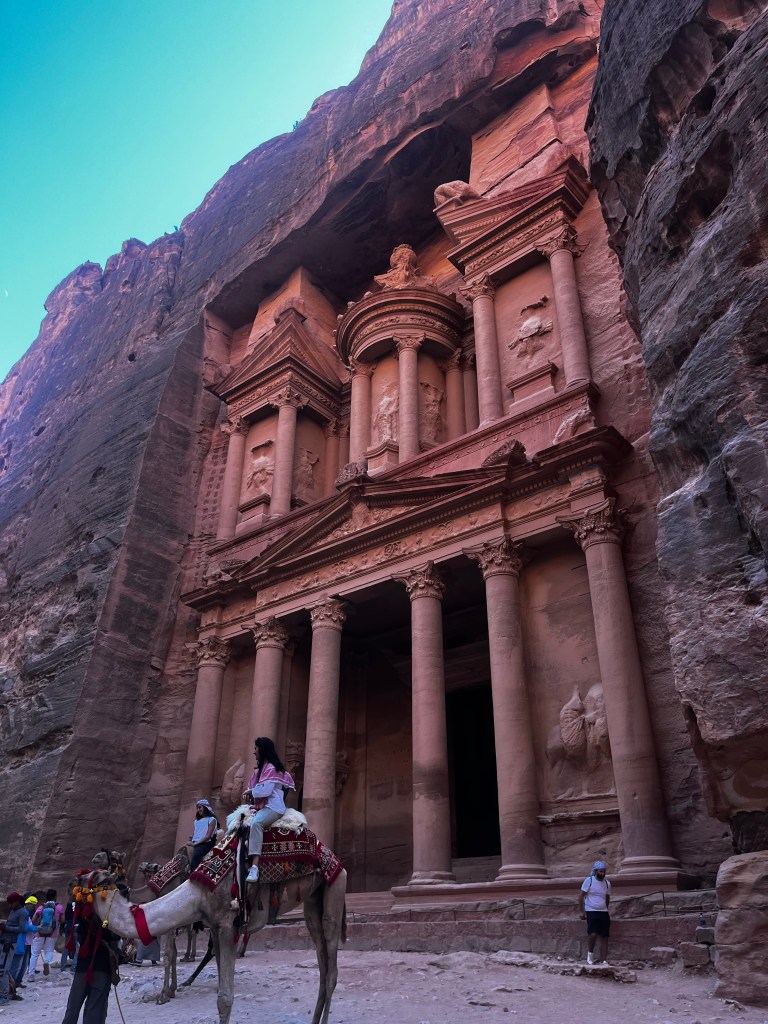
The journey through Petra was incredible, with rock formations of different colours of orange that had been there for over 2300 years, it was another world. Upon reaching The Treasury, undoubtedly the most renowned site within Petra, I felt slightly overwhelmed. Fortunately, it wasn’t swarming with tourists on the day of my visit, though I’ve heard that when cruise ships dock in the nearby Red Sea, it can get quite crowded. I felt fortunate to have chosen a quieter day for my exploration. While wandering through Petra, I observed people riding camels, donkeys, and horse carts, although personally, I would never take part in these activities and I found it quite sad. Additionally, there were persistent offers from locals to take pictures, a common occurrence in tourist hotspots. Nevertheless, the atmosphere of being in such a historical mystery was great.
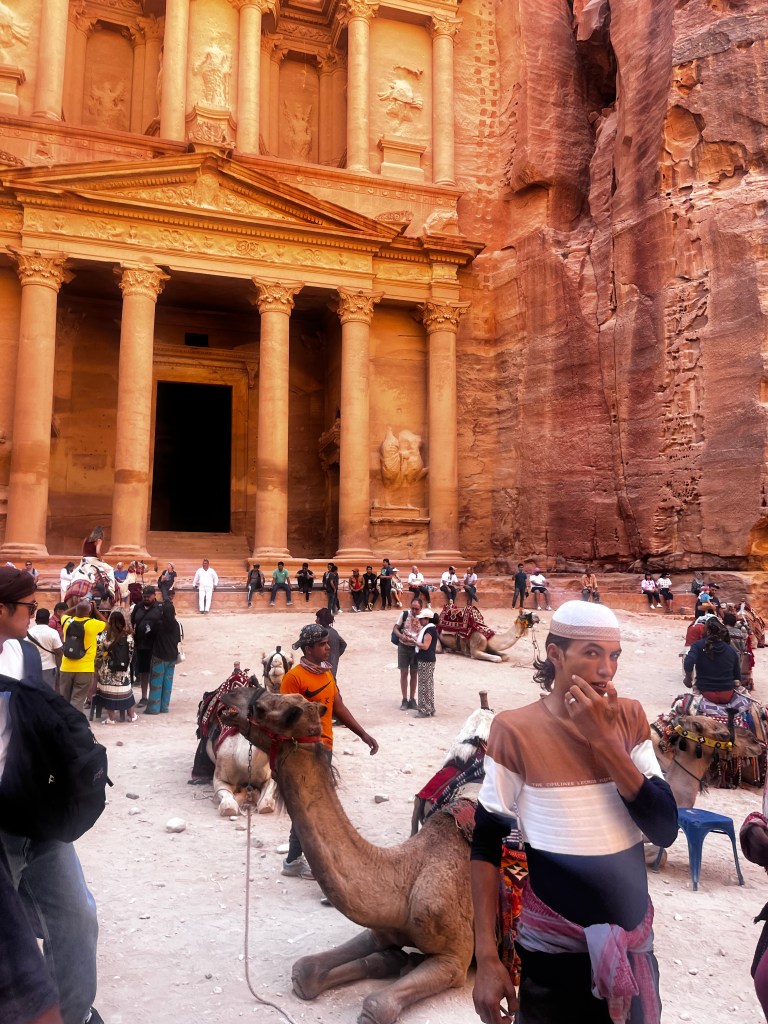
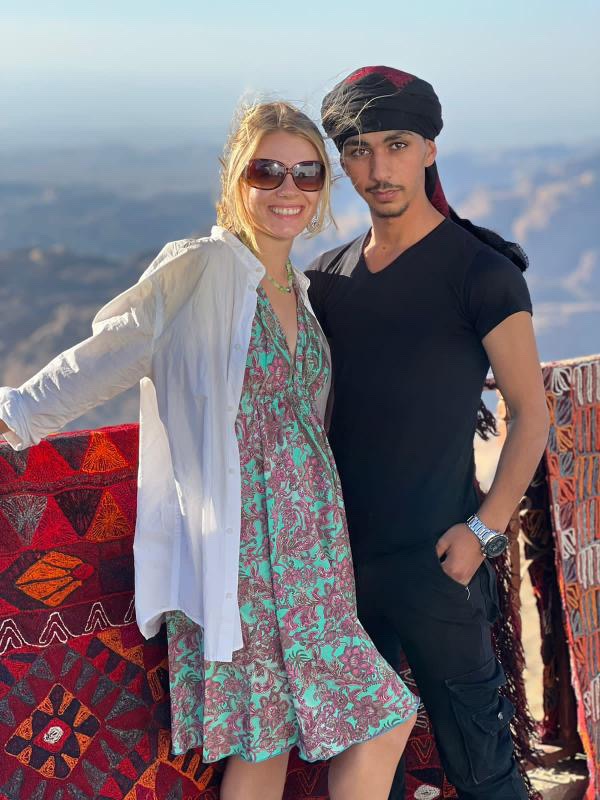
During a pit stop at a viewpoint for some watermelon and Arabian coffee after Petra, I met a cool Bedouin guy after my curiosity led me to ask why he wore eyeliner, and he explained that, in their culture, it’s considered a form of medicine and helps protect the eyes from the desert dust. We sat and talked for a while and fed his dog watermelon before I made my way back to the Jordan-Israel boarder. After taking a DNA test a few years ago to confirm I must be more than British, which came back with 99% British and randomly 1% Saudi Arabian, test perhaps is what made me feel so rooted with connection in the Middle East and I want to find out why (part joking, mostly not). I made my way back to Eliat to go diving the next morning before going back to a hostel I volunteer in Tel Aviv.
(Any facts I have written in this post comes from local people and all ideas come from my perspective of what I have learnt during my short time exploring Jordan)
 Bevs Backpacking📍
Leave a comment