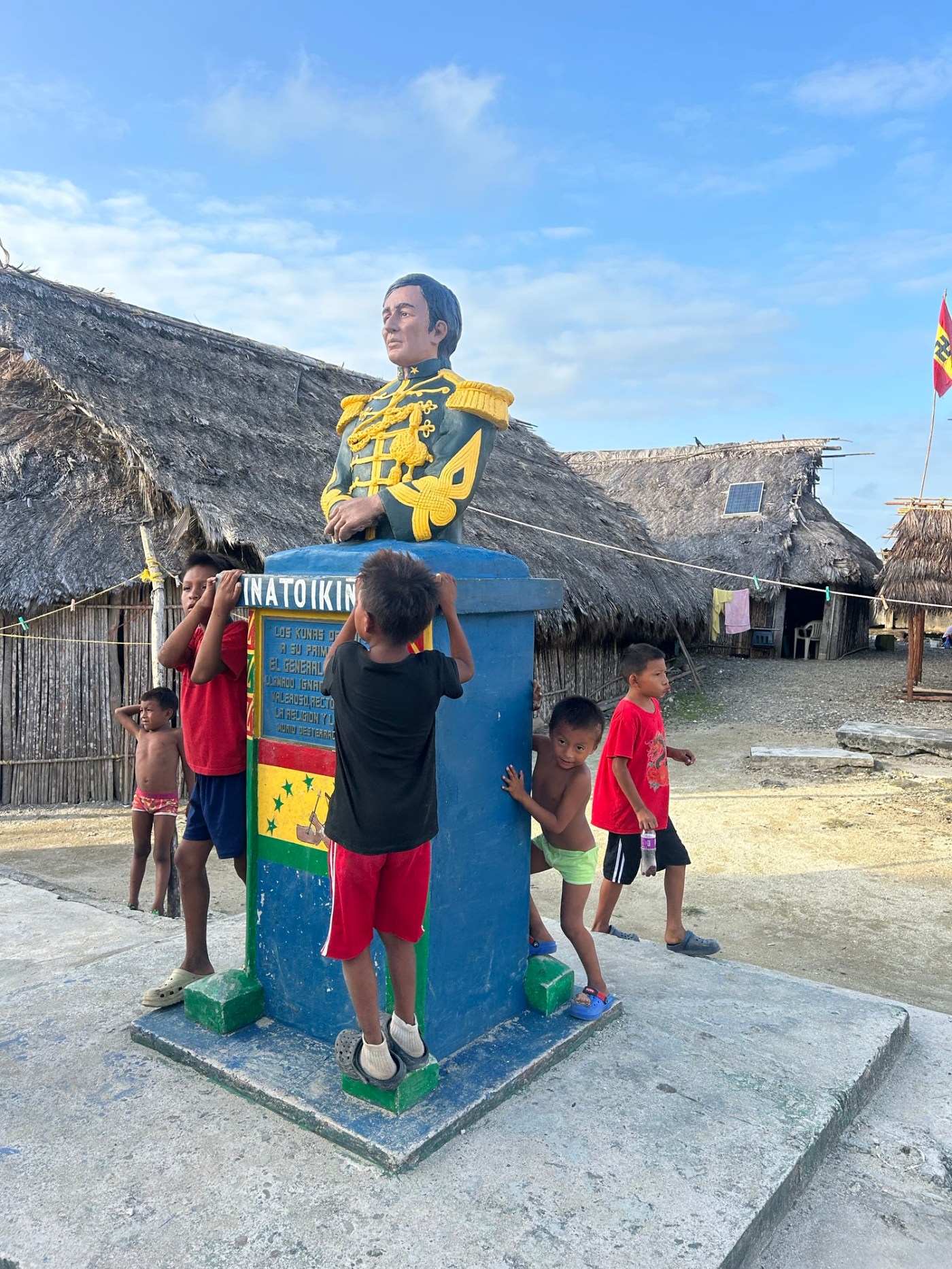
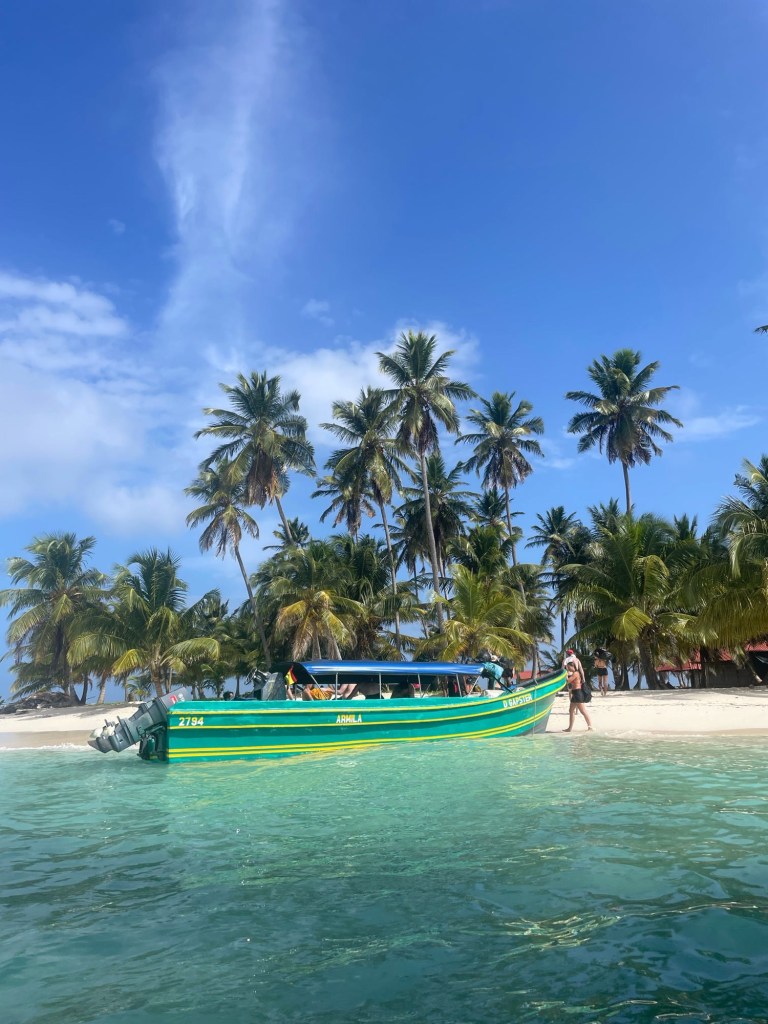
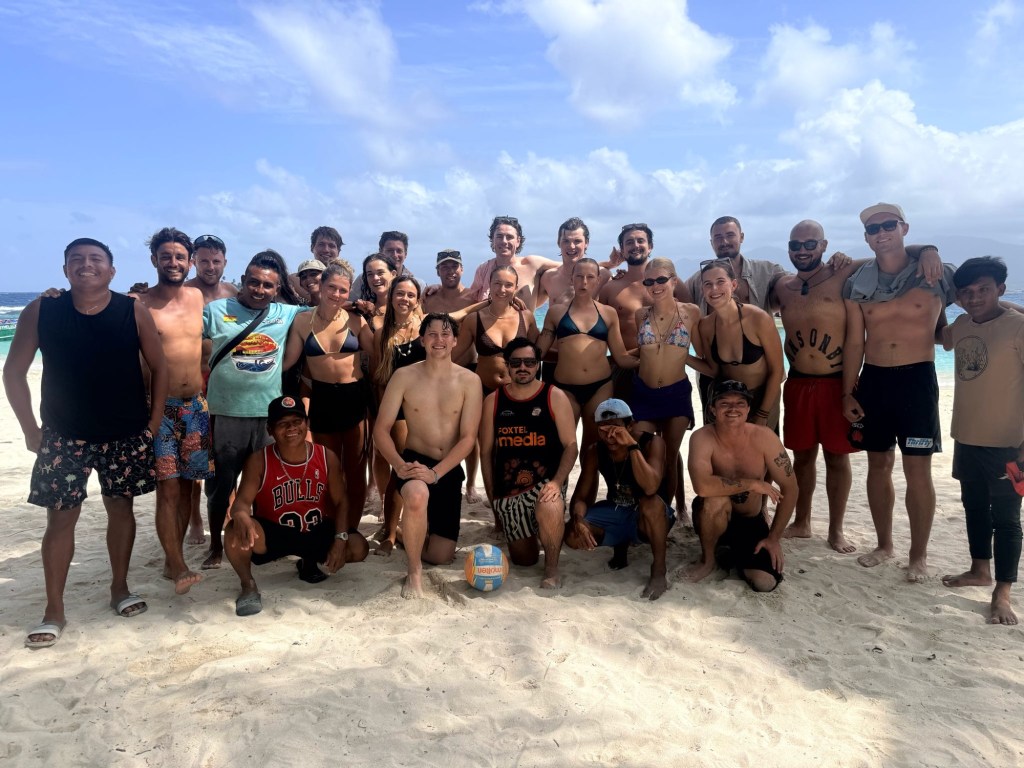
Sailing through the San Blas Islands in Panama for five days with twenty-one strangers was incredible — sharing coconuts straight from the tree, playing beach volleyball, and falling asleep to the sound of the sea in hammocks. But what stood out for me in this experience is the land we were stood on, belonging to the indigenous Kuna tribe. Here is what interested me the most, relaxing on the beach was of course amazing, but learning about why we were there felt much more important to write about.
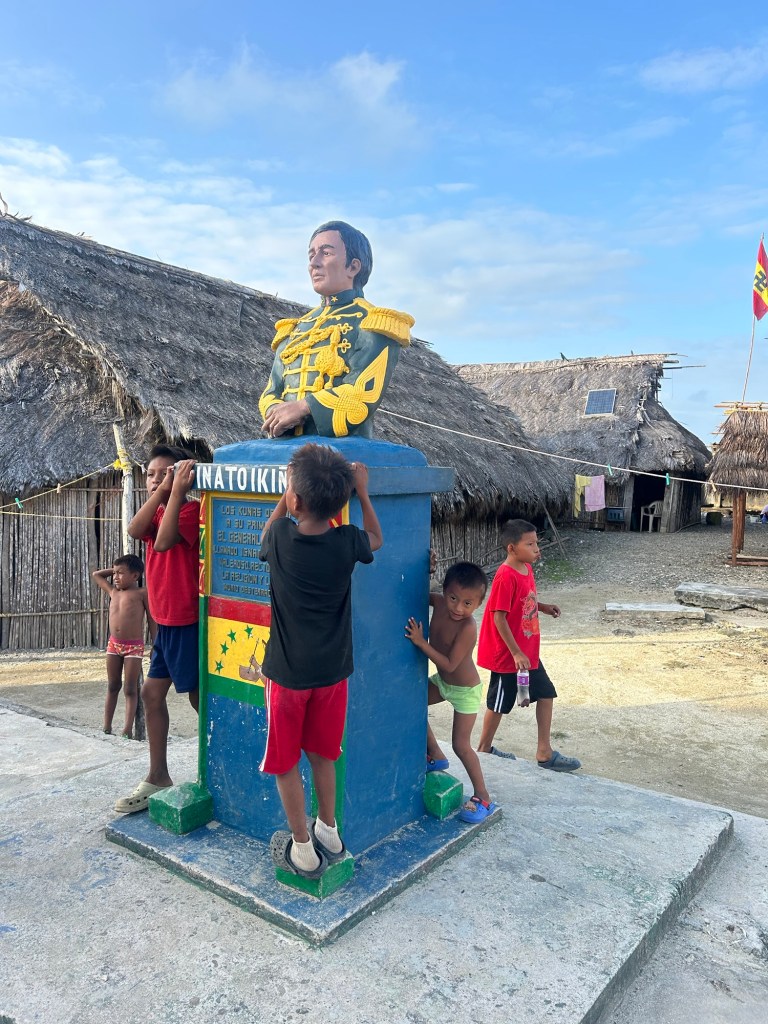
While on the boat tour with San Blas Adventures, we were able to meet and learn about Kunas. Wanting to understand more, I later joined a walking tour in Panama City and visited a Kuna museum, learning about their history, traditions, and deep connection to this place. We mostly learnt on one of their main island and a guide showed us around.
We asked the main income on the islands and it was coconuts! 50,000 coconuts are produced per month, they have a deal with Colombia. Colombian ships will bring rice and other foods to each island, and the countries trade right there on the San Blas islands. There is a tab system, Colombians will trade on all of the islands until their produce has ran out, and then they go back to each island to load up coconuts ready to be taken to factories to make coconut products. Locals often still have small farms on the mainland that they sail to, in order to produce food themselves.
But it was never that easy, in the 1800’s, Kunas ran from Colombia while the Spanish invaded and into the Darien Gap. Diseases like malaria and dengue that was bought over from Europe began and so the Kunas eventually reached the San Blas Islands where they settled. Panama is a young country because 1903 is when Panama gained independence and separated from Colombia. Then, between 1915 and 1925, armed police were sent into Kuna communities as part of a forced campaign to change their culture. Despite the fact that the Kuna already had their own systems of government and traditions. This escalated as Kunas were forbidden to access their farms in the mainland. Police began confiscating their livlihood from the kunas and treating them poorly. And then resistance became brutality.
In response, the Kuna’s trained in the jungle and formed a network of spies to monitor the police. Their opportunity came during Carnival—when the police were least expecting it. The Kunas launched a surprise attack, and they won, reclaiming control over their communities. We were told by a young Kuna there were no deaths on either side, however we met an older Kuna in Panama City on a walk in tour, he said the battle was gory and his grandfather was beheaded.
Today, Kuna’s remain as Panamanian citizens, but their communities maintain their own identity and rules. Even Panamanians and other foreigners must pay a tax to enter the Kuna islands, a rule that helps protect their land and culture. Now if the Panamanian government wants to build or change anything to the islands they must discuss it with the Kuna Leaders. Now, the government treats the Kunas with respect, wanting them to be part of Panamanian culture to protect the land. They still provide healthcare and education to the Kunas. Indigenous community makes up 25% of population is what I was told on the walking tour, (although Google tells me 12%).
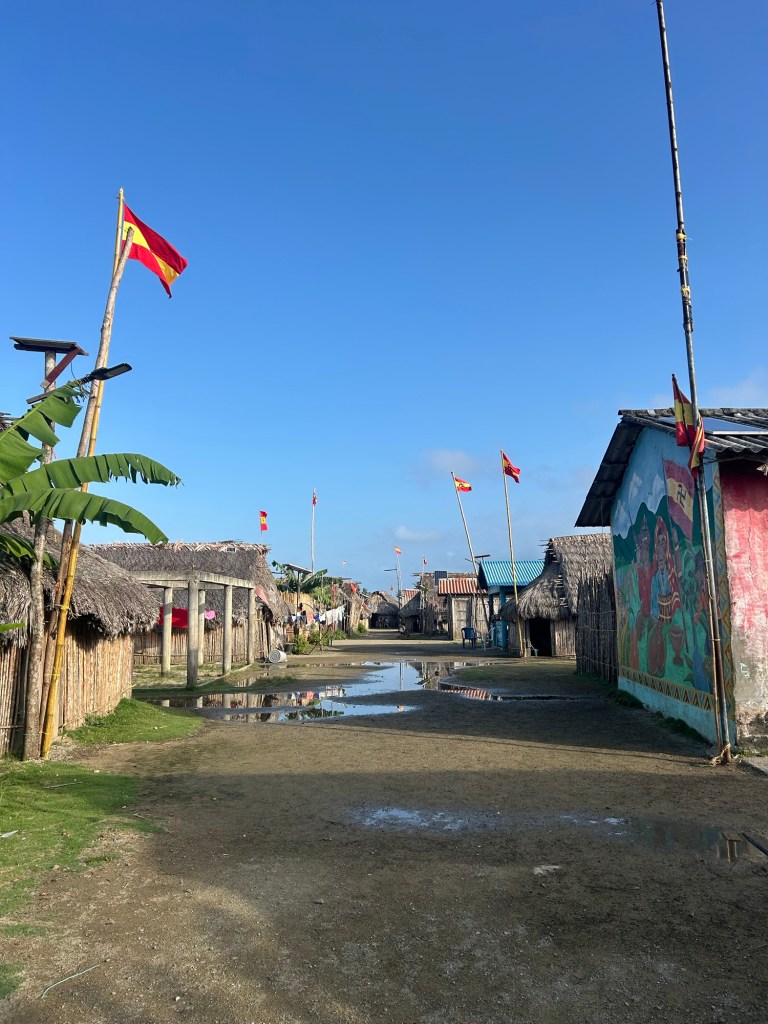
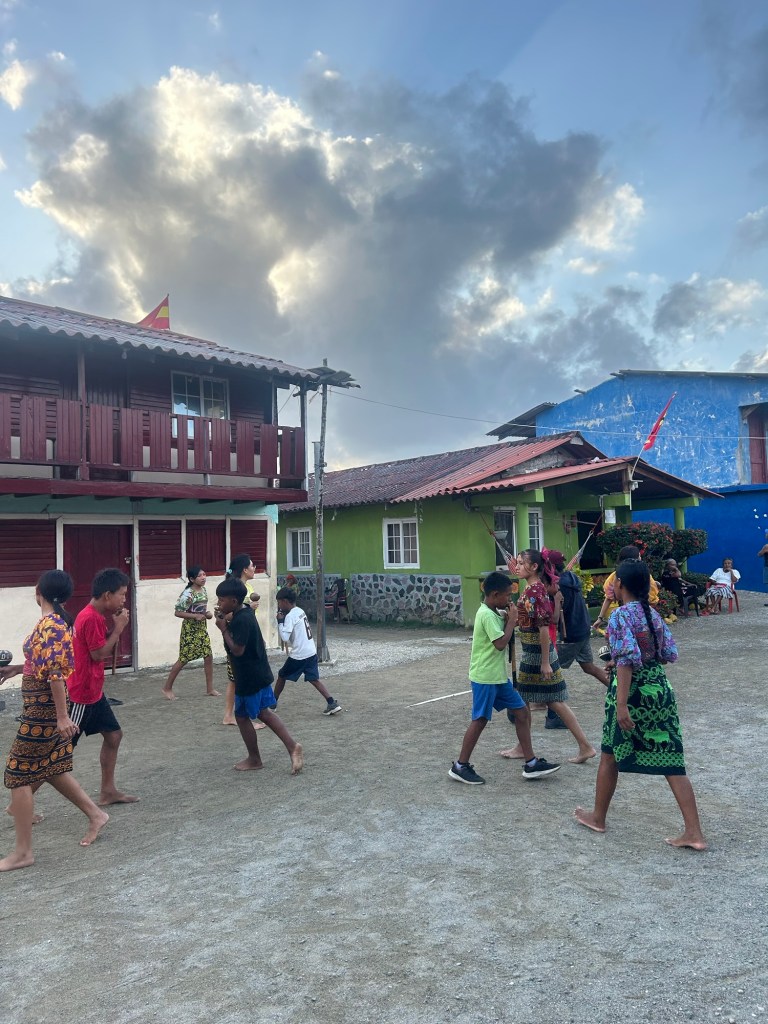
Nowadays, the Kunas live on their islands, taking canoe boats to visit their neighbours. The ratio on the large island was 500 children to 500 adults, meaning there were children everywhere playing and the island spanning one mile was full of life, a community seeming so far away from western culture these days. When the children come of age for university, they head to Panama City to study and I can’t imagine the change going from island life to a big business centred city. They often get their degree and return to their islands as doctors and teachers for the community. Although there are Kuna neighbourhoods in Panama City for them if they were to stay which helps them adjust to modern life.
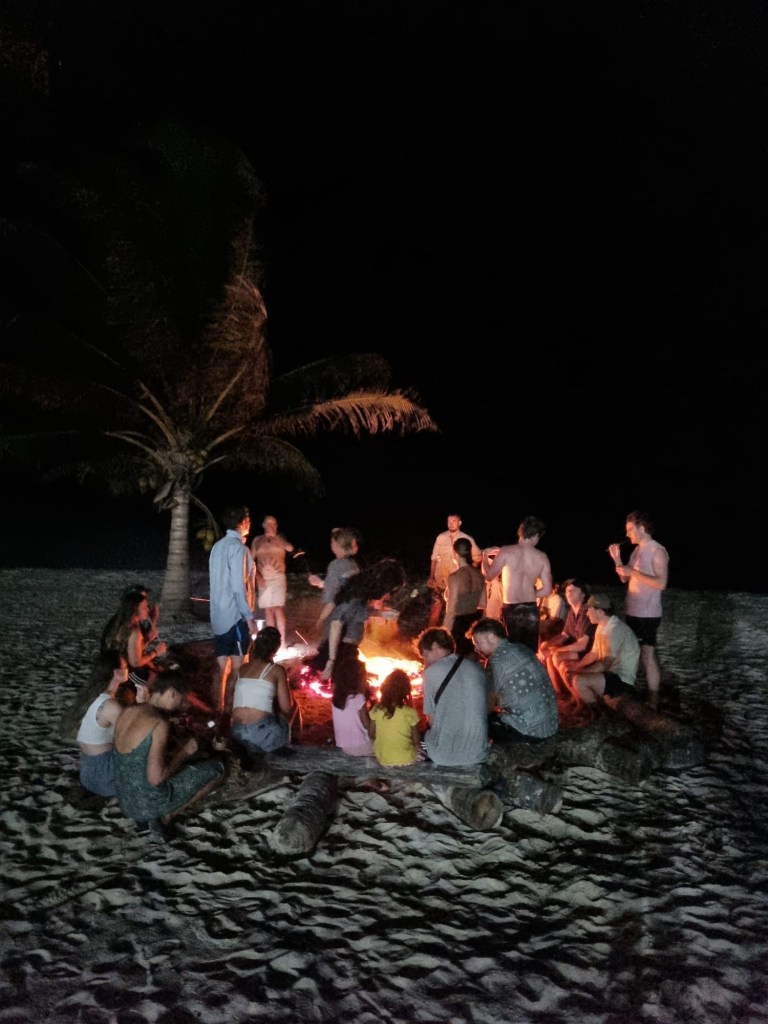
While exploring the island, the Kunas performed a dance for us, fed us and allowed us the stay in their homes. They take so much pride in their islands, like for example I asked why there were no dogs and it was to keep the streets clean. Everyone was smiling and happy to see you, it also didn’t feel like a tourist trap as we were the only ones there and a lot of our money we paid for the trip goes towards helping the communities.
We toured the Panama Canal after reaching Panama City, I learnt tourism makes $1.5 billion more money than the canal, which was shocking. But after learning all of this information during my time in Panama I can see why, it’s such a special country filled with diversity that connects the world.
Relaxing on the beach was incredible — but learning why we were there, and who these islands truly belong to, is what made this trip unforgettable. This is the part of travel I appreciate the most. Understanding the countries people, and experiencing it with respect and curiosity.
 Bevs Backpacking📍